
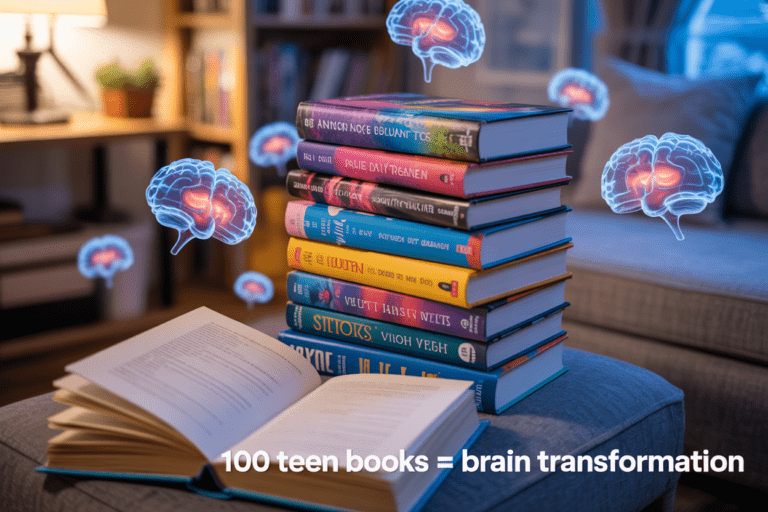

Last year, I dove headfirst into teen literature and read 100 young adult books in 12 months. What started as curiosity about the YA buzz turned into an eye-opening journey that completely changed how I think about storytelling, emotions, and even myself.
This deep dive is for parents wondering what their teens are reading, educators looking to connect with students, adult readers curious about the YA phenomenon, and anyone who’s ever dismissed teen books as “just fluff.” Trust me – there’s way more happening in these pages than you might expect.
I’ll share how consuming young adult fantasy novels, romance series, and dystopian fiction rewired my brain in unexpected ways. We’ll explore the unique themes and writing elements that make YA fiction so addictive and powerful. Plus, I’ll break down what this genre actually teaches us about resilience, identity, and human connection – lessons that hit just as hard at 30 as they do at 15.
Spoiler alert: teen books aren’t just for teens anymore, and there’s solid science behind why adults are flocking to YA shelves.
Buy Now
Understanding Young Adult Literature

Distinct characteristics that separate YA from other fiction categories
Young adult fiction possesses distinct attributes that differentiate it from other age categories of fiction. YA literature is typically written for, published for, or marketed to adolescents and young adults, roughly ages 13 to 18, creating a unique literary category with specific characteristics.
Adolescent protagonists and age-appropriate storylines
The vast majority of YA stories feature an adolescent as the protagonist, with subject matter and storylines consistent with the main character’s age and experience. This ensures that young adult romance novels, young adult fantasy novels, and other YA works maintain relevance and relatability for their target demographic.
Diverse genres within the YA category
YA stories encompass the entire spectrum of fiction genres, with settings limited only by the author’s imagination and skill. From young adult fantasy series and young adult dystopian narratives to young adult mystery novels and romance young adult books, the category spans virtually every fictional genre while maintaining age-appropriate themes.
Key Themes and Writing Elements in YA Fiction

Coming-of-age narratives and problem novels focus
Young adult fiction fundamentally centers on youth challenges, earning the category recognition as ‘problem novels’ or ‘coming-of-age novels.’ These narratives position adolescent struggles as central story elements, whether exploring identity crises in young adult fantasy novels or relationship dynamics in young adult romance series. The writing styles span dramatically from rich literary complexity to clear, accessible prose that doesn’t obstruct the story flow. Despite their unique characteristics targeting young readers, young adult fiction novels maintain the same foundational storytelling elements as all literature: well-developed characters, compelling plots, vivid settings, meaningful themes, and distinctive stylistic choices that define the author’s voice.

Reading 100 teen books in one year opened my eyes to the incredible depth and diversity within young adult literature. From the fundamental understanding that YA fiction centers on adolescent protagonists facing age-appropriate challenges, to recognizing the sophisticated themes of identity, growth, and resilience that define the genre, this journey revealed how these stories span every possible setting and style imaginable. The writing elements—from rich literary prose to fast-paced, accessible narratives—all serve the same purpose: connecting with readers during one of life’s most transformative periods.
What surprised me most was how these “problem novels” or “coming-of-age” stories didn’t just entertain, but genuinely shaped my perspective on youth experiences and universal human struggles. Young adult literature proves that age categories don’t limit storytelling power—they simply focus it. Whether you’re a teen discovering these books for the first time or an adult revisiting the genre, there’s something profound about stories that capture the intensity and possibility of adolescence. Give YA fiction a chance, and you might just rediscover the transformative power of reading through younger eyes.